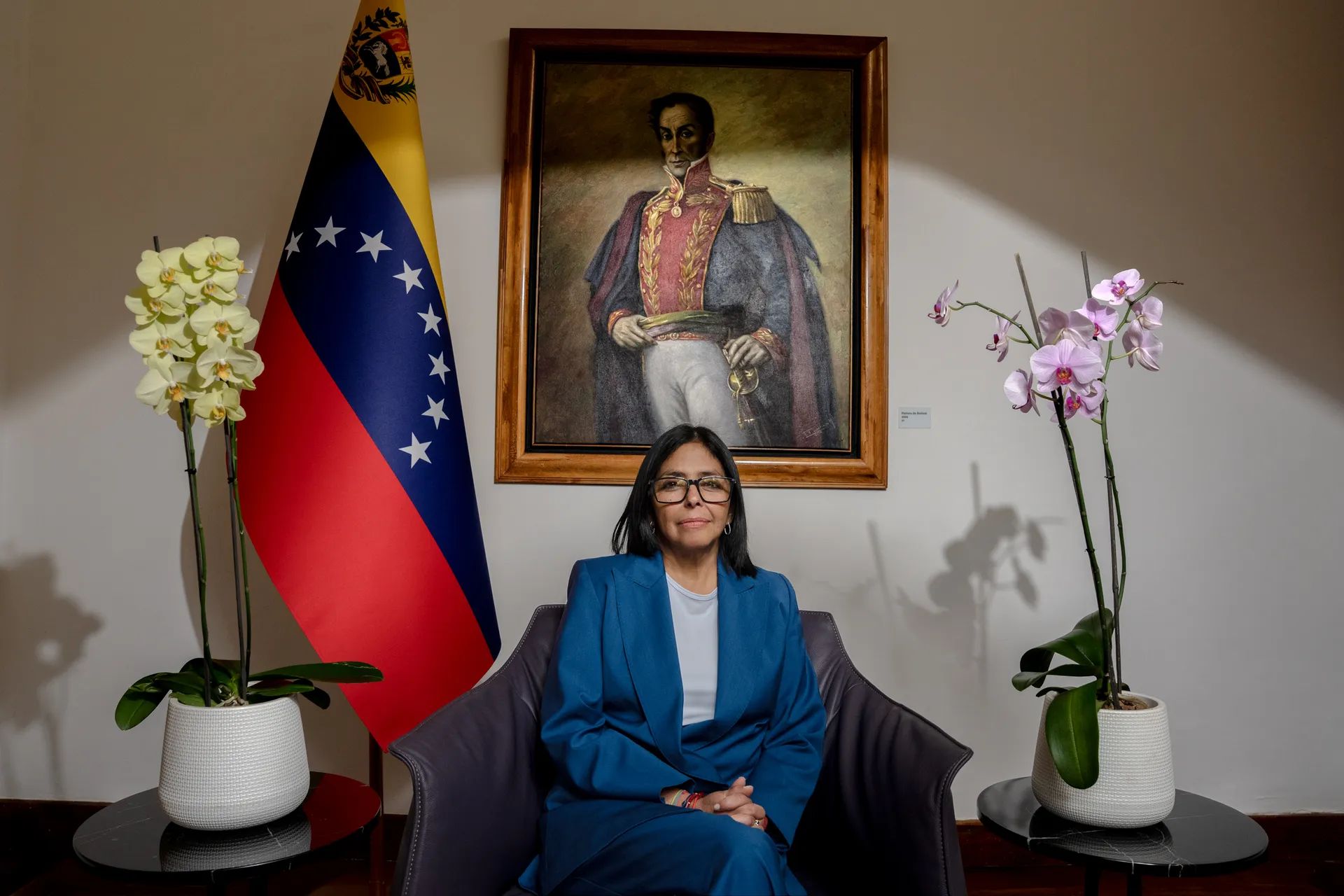
From the gilded, marble-lined halls of Miraflores Palace—where portraits of Simón Bolívar and Hugo Chávez still overlook daily cabinet affairs—acting President Delcy Rodríguez is presiding over one of the sharpest geopolitical reversals in modern Latin American history.
Once a fiery ideological defender of Chavismo and a top deputy to Nicolás Maduro, Rodríguez has spent the months since Washington’s January intervention executing a high-stakes balancing act: accommodating American economic and security demands while attempting to preserve domestic stability and retain control over the state apparatus.
From Ultimatum to Accommodation
Rodríguez’s sudden elevation to acting leadership followed the dramatic U.S. operation in Caracas that removed Nicolás Maduro and transported him to New York to face federal charges. Presented by U.S. Secretary of State Marco Rubio with a stark ultimatum—cooperate with Washington’s core policy demands or face escalating military pressure—Rodríguez opted for pragmatic compliance.
That decision unlocked immediate diplomatic and commercial shifts:
-
Resumed Air and Trade Links: Direct commercial flights by major U.S. carriers such as American Airlines and United Airlines returned to Caracas for the first time in years.
-
Energy Sector Reopening: Multinational energy giants—including ExxonMobil, ConocoPhillips, and Halliburton—alongside new concession holders like NABEP, have re-entered negotiations to rehabilitate dormant fields and refineries.
-
Privatization and Border Shifts: Caracas has begun cataloging non-essential state assets for private investment while cracking down on Colombian guerrilla encampments along the western frontier.
Signs of Recovery Amid Deep Skepticism
Across Caracas, visible markers of economic thawing have emerged. Construction cranes have reappeared on the skyline, supermarket shelves are better stocked, and foreign business delegations frequently populate upscale hotels.
Yet relief over the end of hyperinflation and Maduro’s rule has not translated into widespread affection for Rodríguez. Inside Venezuela, public opinion remains sharply divided:
| Perspective | Core Argument |
| Washington & Business Partners | Views Rodríguez as a disciplined, pragmatic interlocutor capable of maintaining order and honoring commercial energy contracts without triggering civil chaos. |
| Returning Opposition (María Corina Machado) | Accuses the interim administration of trading away sovereign resources to stay in power while delaying transparent presidential elections. |
| Hardline Chavista Loyalists | Struggles to reconcile Rodríguez’s revolutionary pedigree with sweeping privatizations and close coordination with the Trump administration. |
Partner or Proxy?
Rodríguez rejects characterizations that she has turned Venezuela into a foreign proxy, maintaining that her priority is preventing external political agendas from destabilizing the nation. However, with returning opposition leader María Corina Machado mobilizing street crowds for presidential elections in 2027, the interim leader faces mounting pressure from both domestic voters and international observers.
Whether Rodríguez is remembered as a shrewd pragmatist who salvaged a collapsing economy or an interim figure buying time for an entrenched political elite will depend on whether economic recovery gives way to genuine democratic competition.