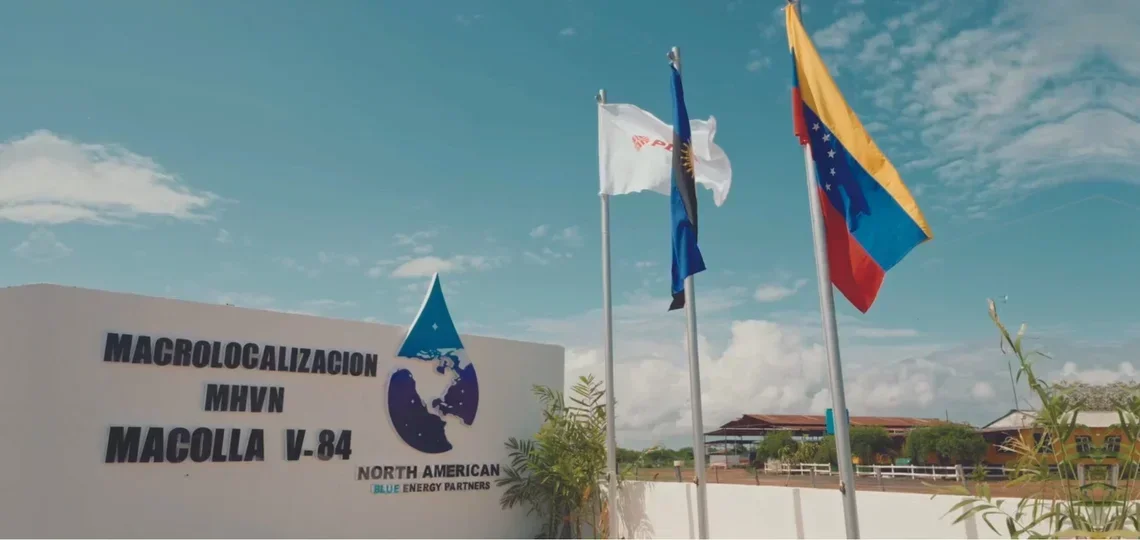
At the center of Washington’s sweeping economic and geopolitical pivot in Venezuela sits an ambitious commercial entity: North American Blue Energy Partners (NABEP).
While political leaders have touted the arrival of Venezuelan crude at Gulf Coast refineries as a diplomatic triumph, the entire operational and financial framework behind the revival hinges on NABEP’s unprecedented long-term concessions, private investment targets, and complex equity arrangements.
The Architecture of the NABEP Agreement
Announced in late August 2026, the bilateral framework established NABEP as the primary vehicle to rehabilitate Venezuelan upstream production, effectively taking over concessions previously dominated by state-run Petróleos de Venezuela (PDVSA) or former Russian and Chinese joint ventures.
The agreement includes several foundational components:
-
100-Year Concessions Across 17 Fields: NABEP was granted century-long operational rights covering 17 key fields in the Lake Maracaibo basin and the Orinoco Heavy Oil Belt, representing an estimated 65 billion barrels of proven crude reserves.
-
U.S. Government Equity and Purchase Rights: The United States government holds rights to a 35% equity stake in NABEP’s parent company, along with the right to purchase 20% of its oil production directly at production cost—with zero commercial markup—once PDVSA takes its contractually allotted share.
-
$100 Billion Investment Target: NABEP has outlined long-term capital deployment goals reaching $100 billion, aiming to boost production from roughly 200,000 barrels per day (bpd) toward 1 million bpd within six to seven years.
-
Fiscal Revenues for Caracas: Projections suggest Venezuela could collect up to $209 billion in royalties and taxes over the first 25 years through production contracts (CPP leases).
From Lake Maracaibo to the Texas Gulf Coast
The delivery of one million barrels of Venezuelan crude to the Port of Corpus Christi, Texas, served as the initial proof of concept for the bilateral pipeline.
American Gulf Coast refineries in Texas and Louisiana were custom-engineered decades ago to refine extra-heavy sour crude from the Orinoco Belt. With lighter domestic shale oil lacking the specific viscosity needed for optimized diesel and petrochemical yields, Venezuelan barrels provide ideal feedstock—replacing pricier imports from the Middle East.
Steep Operational Hurdles
Despite the scale of the announced deal, independent analysts and energy intelligence firms warn that translating paper concessions into sustained barrels faces formidable roadblocks:
-
Dilapidated Well Infrastructure: In Lake Maracaibo alone, roughly 80% of more than 4,000 inactive wells require extensive workover and structural repairs before they can resume output.
-
Financing and Liquidity Scrutiny: NABEP’s $100 billion capital target reflects long-term funding projections rather than immediate, committed capital on balance sheets, leaving questions regarding ongoing vendor financing.
-
Severe Human Capital Deficits: Over two decades of brain drain have scattered Venezuela’s most experienced petroleum engineers and technicians across the Americas, complicating efforts to rapidly staff up drilling rigs and upgrader facilities.
-
Domestic Transparency Concerns: Returning opposition figures, including Nobel laureate María Corina Machado, have voiced concern over the lack of legislative review and transparency in multi-decade energy contracts signed during an interim transition period.
Strategic Outlook
NABEP represents a radical experiment in energy diplomacy: blending sovereign state equity, private capital execution, and strategic resource allocation. Whether it becomes the catalyst for a Venezuelan economic resurgence or stumbles under legacy infrastructure rot depends on how quickly NABEP can deploy workover rigs, recruit skilled crews, and deliver measurable production gains to world markets.